
 Dr. Oliver Lawrence
Technology and Education Social Justice Series
Racism 101
Non-Racialism 101
Black in a White World

Community Organizing – Organizations

Data Mining

Educator-Technologist: The key to merging learning and technology
Empower Me!

Ethical Values

Five Orientations of Peace

Flash 2D Animation

Internet 101: An introduction to web surfing (Online Learning)

Language Revitalization using Technology

Stories from South Africa Vol. 1
Meeting Diversity, Seeking Commonality: International students in America
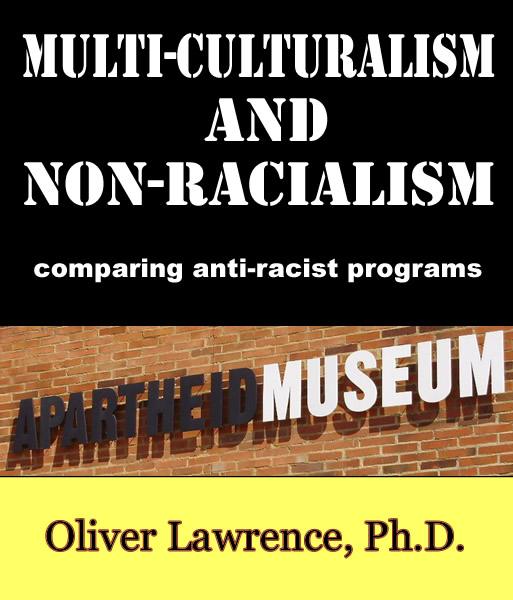
Multiculturalism and Non-Racialism: Comparing anti-racist programs
Poverty: A Personal Perspective
Stories from South Africa Vol. 2

Roman Numerals

Roman Numerals

Why bullying persists

Story as Case Study

Tapping Natural Learning Systems
Technology for Committees:
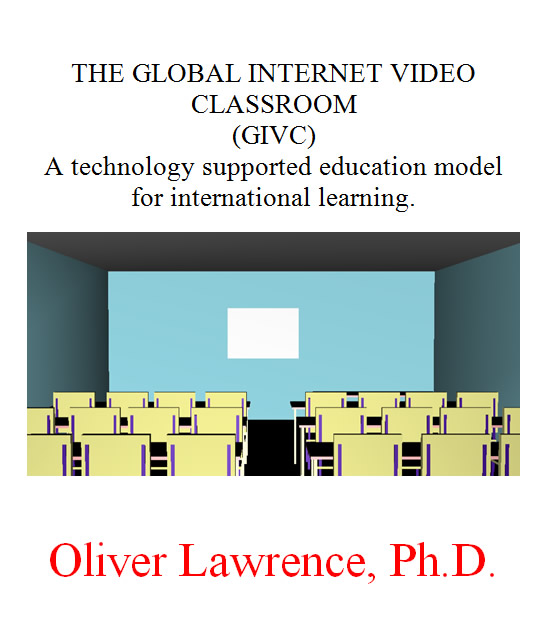
The Global Internet Video Classroom (GIVC): A technology supported education model for international learning.

The Mediation Play
Non-Racialism

The Learning Organization
Ubuntu, Truth and Reconciliation
Black Identification
This is an analysis of Black Identification. While colonialism and slavery shaped the world, Blacks had to contend with being identified by others. During the rise of Pan-Africanism, Civil Rights, Black Power, Black Consciousness and Non-Racialism, Blacks learned the value of self-identification. A working definition of racism is any action or attitude, conscious or unconscious that subordinates an individual or group based on skin color or race. This subordination can be enacted individually or institutionally (Ford, 1994, p 11). Malcolm X says that "When we say 'black,' we mean everything not white.
Black identification has been largely imposed by European settlers through the colonization of Africa. To understand black identity one needs to explore historical events that formed the social context of identity development. The tenets of critical race theory support the formulation of theory through the actions and words of the actors who created the historical foundations of the philosophies we embrace. Brown (1995) declares that the critical race theory "manifesto" might be characterized as follows: We, as people of color, were not there when conventional legal standards were being formulated. Little wonder that these traditional meritocratic standards have worked to exclude us historically, and still work to exclude us. Disenfranchised people of color theorize, but they theorize in different ways. They tell stories. Hear us, and hear us in our own voices. It is only then that you will truly hear us.
A major factor contributing to the dominant status of the European American ethnic group has been the institutionalization of their culture and their ability to display their ethnic identity as the norm in school settings. Conversely, students from ethnic groups of color have had to construct, maintain, and develop their ethnic identities in situational contexts that often require them to restrict or suppress the natural display of internal ethnic behaviors. Scholars point out that the psychological dimensions of ethnicity, if compromised, can create conflict for individuals whose social relationships and cultural practices become removed from their sense of identity (Bentley, 1987; de Vos, 1982; Hernández Sheets, 1999)
|
|
Community Organizing. Take this course online to learn community organizing strategies. A certificate is obtainable for a successful supervised campaign. |